Current location:Home > Pharmaceutical
Product

Cost-effective and customizable Iron 7439-89-6 for sale
- Molecular Formula: Fe
- Molecular Weight: 55.847
- Appearance/Colour: grey crystalline powder, rod or chips
- Melting Point: 1535 °C(lit.)
- Boiling Point: 2750 °C(lit.)
- Flash Point: >230 °F
- PSA: 0.00000
- Density: 1.05 g/mL at 20 °C
- LogP: -0.00250
Iron(Cas 7439-89-6) Usage
|
Chemical Description |
Iron is a metallic element used in many industries, including construction and manufacturing. |
|
History |
Iron has been known to mankind from early civilization. In fact, a period of history, the “iron age,” is named for the widespread use of this metal. For almost a thousand years, it remained as the single most-used metal, and its use in mechanization made the industrial revolution possible. Iron, after oxygen, silicon and aluminum, is the fourth most abundant element in the earth’s crust. It is the prime constituent of earth’s core along with nickel. Its abundance in the crust is 5.63%. Its concentration in the seawater is about 0.002mg/L. The principal ores of iron are hematite, Fe2O3; pyrite, Fe2S2; ilmenite, FeTiO3; magnetite, Fe3O4; siderite, Fe2CO3; and limonite [FeO(OH)]. It also is found in a number of minerals, such as corundum, as an impurity. It also is found in meteorites. Iron occurs in every mammalian cell and is vital for life processes. It is bound to various proteins and found in blood and tissues. The iron-porphyrin or heme proteins include hemoglobin, myoglobin and various heme enzymes, such as cytochromes and peroxidases. Also, it occurs in non heme compounds, such as ferritin, siderophilin, and hemosiderin. Hemoglobin, found in the red blood cells, is responsible for transport of oxygen to the tissue cells and constitutes about two-thirds (mass) of all iron present in the human body. An adult human may contain about 4 to 6 grams of iron. |
|
Content analysis |
Accurately weigh approximately 200 mg of the sample and transfer it into a 300 ml Erlenmeyer flask, add 50 ml of a dilute sulfuric acid solution (TS-241). Use a plug containing a Bunsen valve (the production method is to insert a glass tube connected with a short segment of rubber tube to the plug. The side of the rubber tube has a long slit while the other side is inserted of a glass rod so that the gas can escape and the air can’t enter). The solution was heated on a steam bath to dissolve the iron. After cooling, dilute with 50 ml of freshly boiled and cooled water. Add 2 drops of the test solution (TS-162) to 0.1 mol/L Apply cerium sulfate titration to until the red color becomes light blue color. Each ml of 0.1mol/L of high cerium sulfate are equivalent to 5.585 mg of iron (Fe). The method is the same as that of "reduced iron (01219)”. |
|
Production Methods |
Most iron produced today is from its oxide minerals, hematite and magnetite. The process involves reducing mineral iron with carbon in a blast furIRON 411nace. There are several types of blast furnaces which vary in design and dimensions. The overall processes, however, are more or less the same. One such process is outlined below: The mixture of ore, coke and limestone is fed into the blast furnace from the top. The materials are preheated to about 200°C in the top most zone. Hematite is partially reduced to magnetite and then to FeO by the ascending stream of carbon monoxide formed at the bottom and mid zones of the furnace resulting from high temperature oxidation of carbon. The ferrous oxide FeO formed at the top zone is reduced to metallic iron at about 700°C in the mid zone by carbon monoxide. A hot air blast at 900°C passes through the entire furnace for a very short time (usually for a few seconds). This prevents any gassolid reaction product from reaching equilibrium. In the temperature zone 700 to 1,200°C ferrous oxide is completely reduced to iron metal by carbon monoxide. Also, more CO is formed by oxidation of carbon by carbon dioxide. Further down the furnace at higher temperatures, around 1,500°C, iron melts, dripping down into the bottom. Also, in this temperature zone acidic silica particles react with basic calcium oxide produced from the decomposition of limestone, producing calcium silicate. The molten waste calcium silicate also drips down into the bottom. In the hottest zone of the blast furnace, between 1,500 to 2,000°C, some carbon dissolves into the molten iron. Also at these temperatures any remaining silicates and phosphates are reduced to silicon and phosphorus, and dissolve into the molten iron. Additionally, other tract metals such as manganese dissolve into the molten iron. The impure iron melt containing about 3 to 4% carbon is called “pig iron”. At the bottom, the molten waste slag floats over the impure pig iron melt that is heavier than the slag melt and immiscible with it. Pig iron is separated from the slag and purified for making different types of steel. Chemical reactions and processes occurring in various temperature zones of blast furnace are summarized below: Pig iron produced in the blast furnace is purified and converted to steel in a separate furnace, known as a basic-oxygen furnace. Jets of pure oxygen gas at high pressure are blown over and through the pig iron melt. Metal impurities are converted into oxides. Part of the dissolved carbon in the impure iron melt is converted into carbon dioxide gas. Formation of SiO2, CO2, and other metal oxides are exothermic reactions that raise the temperature to sustain the melt. A lime flux (CaO) also is added into the melt, which converts silica into calcium silicate, CaSiO3, and phosphorus into calcium phosphate, Ca3(PO4)2, forming a molten slag immiscible with molten steel. The lighter molten slag is decanted from the heavier molten steel. |
|
Mining |
China pyrrhotite-type sulfur pyrite mine has less of mining hills resources. Take the MinXi mine in the DaTian City, Fujian Province and Zhangjiagou mine in Dandong City, Liaoning Province as the representatives; both of them are underground mining mines. The former applies the Housing pile mining method while the later one uses the section mining method. The pit mining process is the same as the method of "phosphate rock." Beneficiation methods include flotation process and flotation-magnetic combined process. |
|
Toxicity |
Iron Powder: GRAS (FDA, § 184.1375, 2000); Inhalation of dust can cause pneumoconiosis. Operation personnel should wear overall, wear dust masks and other labor insurance products. Production equipment should be closed, the workshop should be well-ventilated. Be sure to pay attention to dust protection. |
|
Isotopes |
There are 30 isotopes of iron ranging from Fe-45 to Fe-72. The following arethe four stable isotopes with the percentage of their contribution to the element’s naturalexistence on Earth: Fe-54 = 5.845%, Fe-56 = 91.72%, Fe-57 = 2.2%, and Fe-58 =0.28%. It might be noted that Fe-54 is radioactive but is considered stable because ithas such a long half-life (3.1×10+22 years). The other isotopes are radioactive and areproduced artificially. Their half-lives range from 150 nanoseconds to 1×10⁵ years. |
|
Origin of Name |
The name “iron” or “iren” is Anglo-Saxon, and the symbol for iron (Fe) is from ferrum, the Latin word for iron. |
|
Characteristics |
Iron is the only metal that can be tempered (hardened by heating, then quenching in wateror oil). Iron can become too hard and develop stresses and fractures. This can be corrected byannealing, a process that heats the iron again and then holds it at that temperature until thestresses are eliminated. Iron is a good conductor of electricity and heat. It is easily magnetized,but its magnetic properties are lost at high temperatures. Iron has four allotropic states. Thealpha form exists at room temperatures, while the other three allotropic forms exist at varyinghigher temperatures.Iron is the most important construction metal. It can be alloyed with many other metals tomake a great variety of specialty products. Its most important alloy is steel.An interesting characteristic of iron is that it is the heaviest element that can be formed byfusion of hydrogen in the sun and similar stars. Hydrogen nuclei can be “squeezed” in the sunto form all the elements with atomic numbers below cobalt (27Co), which includes iron. Itrequires the excess fusion energy of supernovas (exploding stars) to form elements with protonnumbers greater than iron (26Fe). |
|
Preparation |
Most iron produced today is from its oxide minerals, hematite and magnetite. The process involves reducing mineral iron with carbon in a blast furnace. There are several types of blast furnaces which vary in design anddimensions. The overall processes, however, are more or less the same. Onesuch process is outlined below: The mixture of ore, coke and limestone is fed into the blast furnace from thetop. The materials are preheated to about 200°C in the top most zone.Hematite is partially reduced to magnetite and then to FeO by the ascendingstream of carbon monoxide formed at the bottom and mid zones of the furnaceresulting from high temperature oxidation of carbon. The ferrous oxide FeOformed at the top zone is reduced to metallic iron at about 700°C in the midzone by carbon monoxide. A hot air blast at 900°C passes through the entirefurnace for a very short time (usually for a few seconds). This prevents any gassolid reaction product from reaching equilibrium. In the temperature zone 700to 1,200°C ferrous oxide is completely reduced to iron metal by carbon monox-ide. Also, more CO is formed by oxidation of carbon by carbon dioxide. Furtherdown the furnace at higher temperatures, around 1,500°C, iron melts, drippingdown into the bottom. Also, in this temperature zone acidic silica particlesreact with basic calcium oxide produced from the decomposition of limestone,producing calcium silicate. The molten waste calcium silicate also drips downinto the bottom. In the hottest zone of the blast furnace, between 1,500 to2,000°C, some carbon dissolves into the molten iron. Also at these temperatures any remaining silicates and phosphates are reduced to silicon and phosphorus, and dissolve into the molten iron. Additionally, other tract metals suchas manganese dissolve into the molten iron. The impure iron melt containingabout 3 to 4% carbon is called “pig iron”. At the bottom, the molten waste slagfloats over the impure pig iron melt that is heavier than the slag melt andimmiscible with it. Pig iron is separated from the slag and purified for makingdifferent types of steel. Chemical reactions and processes occurring in varioustemperature zones of blast furnace are summarized below: Pig iron produced in the blast furnace is purified and converted to steel ina separate furnace, known as a basic-oxygen furnace. Jets of pure oxygen gasat high pressure are blown over and through the pig iron melt. Metal impurities are converted into oxides. Part of the dissolved carbon in the impure ironmelt is converted into carbon dioxide gas. Formation of SiO2, CO2,and othermetal oxides are exothermic reactions that raise the temperature to sustainthe melt. A lime flux (CaO) also is added into the melt, which converts silicainto calcium silicate, CaSiO3,and phosphorus into calcium phosphate,Ca3(PO4)2,forming a molten slag immiscible with molten steel. The lightermolten slag is decanted from the heavier molten steel. |
|
Air & Water Reactions |
Highly flammable. May react with water to give off hydrogen, a flammable gas. The heat from this reaction may ignite the hydrogen. |
|
Reactivity Profile |
Iron is pyrophoric [Bretherick, 1979 p. 170-1]. A strong reducing agent and therefore incompatible with oxidizing agents. Burns in chlorine gas [Mellor 2, Supp. 1:380 1956]. Reacts with fluorine with incandescence [Mellor 13:314, 315, 1946-1947]. |
|
Hazard |
Iron dust from most iron compounds is harmful if inhaled and toxic if ingested. Iron dustand powder (even filings) are flammable and can explode if exposed to an open flame. Asmentioned, excessive iron in the diet may cause liver damage. |
|
Health Hazard |
Fire may produce irritating and/or toxic gases. Contact may cause burns to skin and eyes. Contact with molten substance may cause severe burns to skin and eyes. Runoff from fire control may cause pollution. |
|
Fire Hazard |
Flammable/combustible material. May be ignited by friction, heat, sparks or flames. Some may burn rapidly with flare burning effect. Powders, dusts, shavings, borings, turnings or cuttings may explode or burn with explosive violence. Substance may be transported in a molten form at a temperature that may be above its flash point. May re-ignite after fire is extinguished. |
|
Biochem/physiol Actions |
Carbonyl iron has a role as an absorber of microwave radiation. Carbonyl iron also exhibits shielding properties because of the low density and the connectivity among the fillers it provide. It is used in industries and in the synthesis of nitro-group-containing pharmaceutical ingredients. |
|
Environmental Fate |
Iron occurs rarely by itself in nature due to the ease with which it forms compounds, especially in oxidation reactions. Many iron compounds are water soluble, leading to potentially high concentrations in water, especially in seawater. Iron is a necessary component of all life and it is therefore taken up readily by organisms from all sources. |
|
Purification Methods |
Clean it in conc HCl, rinse in de-ionised water, then reagent grade acetone and dry it under vacuum. |
|
Toxicity evaluation |
In some adults, iron overload can be the result of a genetic defect (idiopathic hemochromatosis) that causes malfunction of the normal homeostasis mechanism and, in turn, excessive absorption of iron. Iron overload can also be caused by too many blood transfusions, which results in too much iron in the various iron-containing organs. Recently, it has been suggested that the presence of increased transferrin concentrations in males is associated with an increased number of heart attacks. This must be corroborated by further research. Excess iron can lead to diabetes mellitus, faulty liver functions, and endocrine disturbance. Iron is a catalyst for oxidative damage leading to lipid peroxidation. The latest hypotheses link peroxidation to heart disease, cancer, and accelerated aging. Iron is involved in the Fenton reaction, which catalyzes the formation of free radicals that cause excessive damage to cells and their components. |
|
Structure and conformation |
Two structural types of iron occur in the solid state. At room temperature iron has a body-centered cubic lattice (the a form). At about 910°C the a form is transformed into the γ allotrope which has a cubic close-packed structure. Around 1390°C a body-centred cubic lattice is reformed—the δ form. Thus the allotropy of iron is unusual in that it can exist with the same crystal form in two distinct temperature ranges which are separated by a range within which a different form is stable. The a and ? forms have similar lattice parameters— the differences between them being expected in view of thermal expansion which increases the size of the unit cell of the δallotrope. |
|
General Description |
Iron, known also as *Ferrum*, *Eisen*, or *Hierro*, is a versatile and earth-abundant transition metal widely employed in catalysis due to its cost-effectiveness, sustainability, and tunable reactivity. It serves as an efficient catalyst in reductive amination for primary amine synthesis, demonstrating broad substrate tolerance and functional group compatibility. Additionally, iron's ligand environment significantly influences its catalytic behavior in radical cyclization reactions, with hydride and borohydride complexes exhibiting distinct reactivities. In bimetallic systems, iron(0) cores enhance catalytic performance by enabling magnetic recovery, electron transfer, and stabilization of active species, as seen in copper-iron nanoparticles for click chemistry. These applications highlight iron's adaptability in homogeneous and heterogeneous catalysis, offering eco-friendly alternatives to noble metals. |
|
Chemical properties |
Iron is the fourth most abundant element in the earth’s crust (5%). It is a transition metal and is placed within the d-block of the periodic table and naturally occurs coordinated with other elements. It is mainly extracted from hematite (Fe2O3) and limonite (Fe2O3·3H2O), although other ores, such as magnetite (Fe3O4), siderite (FeCO3), and taconite (an iron silicate), are also the key sources. Iron is used principally for structural materials, primarily steel, an iron carbon alloy. It is also used in magnets, dyes, pigments, abrasives, and polishing compounds (e.g., jeweler’s rouge). Reduced iron is elemental iron obtained by a chemical process in the form of a grayish black powder, all of which should pass through a 100-mesh sieve. It is lusterless or has not more than a slight luster. When viewed under a microscope having a magnifying power of 100 diameters, it appears as an amorphous powder, free from particles having a crystalline structure. It is stable in dry air. |
|
Physical properties |
Pure iron is a silvery-white, hard, but malleable and ductile metal that can be worked andforged into many different shapes, such as rods, wires, sheets, ingots, pipes, framing, and soon. Pure iron is reactive and forms many compounds with other elements. It is an excellentreducing agent. It oxidizes (rusts) in water and moist air and is highly reactive with most acids,releasing hydrogen from the acid. One of its main properties is that it can be magnetized andretain a magnetic field.The iron with a valence of 2 is referred to as “ferrous” in compounds (e.g., ferrous chloride= FeCl2). When the valence is 3, it is called “ferric” (e.g., ferric chloride = FeCl3).Iron’s melting point is 1,535°C, its boiling point is 2,750°C, and its density is 7.873g/cm3. |
|
Definition |
iron: Symbol Fe. A silvery malleableand ductile metallic transition element;a.n. 26; r.a.m. 55.847; r.d.7.87; m.p. 1535°C; b.p. 2750°C. Themain sources are the ores haematite(Fe2O3), magnetite (Fe3O4), limonite(FeO(OH)nH2O), ilmenite (FeTiO3),siderite (FeCO3), and pyrite (FeS2).The metal is smelted in a blast furnaceto give impure pig iron, whichis further processed to give castiron, wrought iron, and varioustypes of steel. The pure element hasthree crystal forms: alpha-iron, stablebelow 906°C with a body-centredcubicstructure; gamma-iron, stablebetween 906°C and 1403°C with anonmagnetic face-centred-cubicstructure; and delta-iron, which isthe body-centred-cubic form above1403°C. Alpha-iron is ferromagneticup to its Curie point (768°C). The elementhas nine isotopes (mass numbers52–60), and is the fourth mostabundant in the earth’s crust. It is requiredas a trace element (see essentialelement) by living organisms.Iron is quite reactive, being oxidizedby moist air, displacing hydrogenfrom dilute acids, and combiningwith nonmetallic elements. It formsionic salts and numerous complexeswith the metal in the +2 or +3 oxidationstates. Iron(VI) also exists in theferrate ion FeO42-, and the elementalso forms complexes in which its oxidationnumber is zero (e.g. Fe(CO)5). |
InChI:InChI=1/Fe
7439-89-6 Relevant articles
An investigation of the Dy-Fe-Cr phase diagram: Phase equilibria at 773 K
Yao, Qingrong,Wang, Hailong,Liu, Zhanwei,Zhou, Huaiying,Pan, Shunkan
, p. 286 - 288 (2009)
Phase equilibria in the Dy-Fe-Cr system ...
Absorbing properties and structural design of microwave absorbers based on carbonyl iron and barium ferrite
Feng,Qiu,Shen
, p. 8 - 13 (2007)
Carbonyl iron and barium ferrite powder ...
GROWTH OF Fe AND FeAs2 FILMS ON GaAs BY ORGANO-METAL CHEMICAL VAPOR DEPOSITION USING PENTACARBONYL IRON AND ARSINE.
Walsh,Bottka
, p. 444 - 446 (1984)
A number of iron and iron arsenide films...
SYNTHESIS AND STRUCTURAL CHARACTERIZATION OF THE MIXED-METAL CARBIDO CLUSTER Fe5C(μ2-CO)3(CO)11(μ2-AuPEt3)-(μ4-AuPEt3) AND THE OXIDATION OF Fe-Au CLUSTERS
Johnson, Brian F.G.,Kaner, David A.,Lewis, Jack,Rosales, Maria J.
, p. C73 - C78 (1982)
Reaction of 2- with excess (PEt3)AuCl/Tl...
Imaging and magnetometry of switching in nanometer-scale iron particles
Gider,Shi,Awschalom,Hopkins,Campman,Gossard,Kent,Von Molnar
, p. 3269 - 3271 (1996)
The reversal mechanisms in arrays of nan...
Morphology, diameter distribution and Raman scattering measurements of double-walled carbon nanotubes synthesized by catalytic decomposition of methane
Ren, Wencai,Li, Feng,Chen, Jian,Bai, Shuo,Cheng, Hui-Ming
, p. 196 - 202 (2002)
Double-walled carbon nanotubes (DWNTs) w...
Mechanochemical synthesis of Wuestite, Fe1-xO, in high-energy apparatuses
Emel'yanov,Korolev,Mikhailenko,Knot'ko,Oleinikov,Tret'yakov,Boldyrev
, p. 632 - 635 (2004)
It is shown that high-energy milling of ...
Field emission properties of vertically aligned iron nanocluster wires grown on a glass substrate
Kim, Do-Hyung,Jang, Hoon-Sik,Lee, Hyeong-Rag,Kim, Chang-Duk,Kang, Hee-Dong
, p. 109 - 111 (2004)
The synthesis of vertically aligned nano...
Atomic Iron Recoil in Multiphoton Dissociation of Ferrocene
Liou, H. T.,Ono, Y.,Engelking, P. C.,Moseley, J. T.
, p. 2892 - 2896 (1986)
The translational energy of atomic iron,...
Investigation on the temperature-dependent growth rate of carbon nanotubes using chemical vapor deposition of ferrocene and acetylene
Kim, Ki-Eun,Kim, Kang-Jin,Jung, Woo Sung,Bae, Seung Yong,Park, Jeunghee,Choi, Junghyun,Choo, Jaebum
, p. 459 - 464 (2005)
Carbon nanotubes (CNTs) were synthesized...
Preparation, surface modification and microwave characterization of magnetic iron fibers
Nie, Yan,He, Huahui,Zhao, Zhenshen,Gong, Rongzhou,Yu, Hongbin
, p. 125 - 129 (2006)
In this paper, magnetic iron fibers of 3...
Aqueous electrodeposition of iron group-vanadium binary alloys
Yoo,Schwartz,Nobe
, p. 4335 - 4343 (2005)
Electrodeposition of binary iron group (...
Effect of tantalum on phase formation in the Fe-S system
Vershinin,Mar'evich,Chumarev,Selivanov
, p. 1459 - 1463 (2007)
Phase formation in the Fe1 - x -Ta x -S ...
Nitrogen storage properties based on nitrogenation and hydrogenation of rare earth-iron intermetallic compounds R2Fe17 (R=Y, Ce, Sm)
Itoh, Masahiro,Machida, Ken-Ichi,Nakajima, Hiroharu,Hirose, Kazuhiro,Adachi, Gin-Ya
, p. 141 - 146 (1999)
The nitrogen storage properties for the ...
Mechanochemical reduction of magnesium ferrite
Sì?epelaì?k, Vladimiì?r,Menzel, Marcus,Becker, Klaus Dieter,Krumeich, Frank
, p. 6672 - 6678 (2002)
The changes in magnesium ferrite, MgFe2O...
Electrodeposited Ni-Fe-C cathodes for hydrogen evolution
Meguro, Shinsaku,Sasaki, Teruhito,Katagiri, Hiroshi,Habazaki, Hiroki,Kawashima, Asahi,Sakaki, Takashi,Asami, Katsuhiko,Hashimoto, Koji
, p. 3003 - 3009 (2000)
Tailoring of active nickel alloy cathode...
Ferrofluids from prism-like nanoparticles
Ramaye,Neveu,Cabuil
, p. 28 - 31 (2005)
Decomposition of iron pentacarbonyl in k...
Dispersing and coating of transition metals Co, Fe and Ni on carbon materials
Zhong, Ziyi,Liu, Binghai,Sun, Lianfeng,Ding, Jun,Lin, Jianyi,Tan, Kuang Lee
, p. 135 - 143 (2002)
Interaction between transition metals Co...
Synthesis of a Highly Efficient Oxygen-Evolution Electrocatalyst by Incorporation of Iron into Nanoscale Cobalt Borides
Klemenz, Sebastian,Schuch, Jona,Hawel, Stefan,Zieschang, Anne-Marie,Kaiser, Bernhard,Jaegermann, Wolfram,Albert, Barbara
, p. 3150 - 3156 (2018)
High-performance catalysts for the oxyge...
Electrodeposition of metal iron from dissolved species in alkaline media
Allanore,Lavelaine,Valentin,Birat,Lapicque
, p. E187-E193 (2007)
The electrodeposition of metal iron from...
A general strategy for metallic nanocrystals synthesis in organic medium
Huang, Peng,Lin, Jing,Li, Zhiming,Hu, Hengyao,Wang, Kan,Gao, Guo,He, Rong,Cui, Daxiang
, p. 4800 - 4802 (2010)
Herein we report a general synthesis str...
Structure and magnetic properties of electrodeposited Fe-Ni alloy films
Ueda, Yuji,Takahashi, Minoru
, p. 477 - 483 (1980)
Fe-Ni alloy films with a composition of ...
Electrodeposition of iron in sulphate solutions
Díaz,Calderón,Barcia,Mattos
, p. 7426 - 7435 (2008)
The kinetics of iron electrodeposition f...
New syntheses with magnesium hydride. Part 3: Preparation of nanocrystalline or amorphous metals by hydride reduction
Knott, Wilfried,Frommeyer, Georg,Klapdor, Astrid,Windbiel, Dagmar
, p. 459 - 468 (1998)
The tribochemical reduction of metal hal...
Electrodeposition of monodispersed Fe nanocrystals from an ionic liquid
Aravinda,Freyland
, p. 2754 - 2755 (2004)
Monodispersed Fe nanocrystals up to ~2 n...
Magnetic nanoparticles separation based on nanostructures
Sun, Jianfei,Xu, Rui,Zhang, Yu,Ma, Ming,Gu, Ning
, p. 354 - 358 (2007)
This study describes a magnetic array, w...
Association Reactions of Manganese, Iron, and Ruthenium with Nitric Oxide
McClean, Roy E.,Campbell, Mark L.,Vorce, Michelle D.,Medhurst, Laura J.
, p. 2659 - 2663 (1999)
The gas-phase association reactions of g...
Photocatalytic hydrogen evolution under highly basic conditions by using Ru nanoparticles and 2-phenyl-4-(1-naphthyl)quinolinium ion
Yamada, Yusuke,Miyahigashi, Takamitsu,Kotani, Hiroaki,Ohkubo, Kei,Fukuzumi, Shunichi
, p. 16136 - 16145 (2011)
Photocatalytic hydrogen evolution with a...
Growth of single-walled carbon nanotubes by a novel technique using nanosized graphite as carbon source
Terranova,Piccirillo,Sessa,Sbornicchia,Rossi,Botti,Manno
, p. 284 - 290 (2000)
Single-walled carbon nanotubes (SWCN) ha...
Iron thin films from Fe(CO)5 and FeCp2/H2O under atmospheric pressure
Senocq,Duminica,Maury,Delsol,Vahlas
, p. G1025-G1031 (2006)
Iron layers were first obtained from iro...
Visible multiphoton dissociation of Fe(CO)5 for production of iron atoms
Mitchell, S.A.,Hackett, P.A.
, p. 7813 - 7821 (1990)
Ground state (a 5D) and metastable excit...
Mercurous nitrate as a reductimetric reagent. The interference of the more common cations and anions in the determination of iron
Belcher,West
, p. 268 - 271 (1951)
The interfering effect of most of the mo...
On the use of amine-borane complexes to synthesize iron nanoparticles
Pelletier, Frédéric,Ciuculescu, Diana,Mattei, Jean-Gabriel,Lecante, Pierre,Casanove, Marie-José,Yaacoub, Nader,Greneche, Jean-Marc,Schmitz-Antoniak, Carolin,Amiens, Catherine
, p. 6021 - 6026 (2013)
The effectiveness of amine-borane as red...
Investigation of the reduction kinetics of wustite fine powders
Coombs,Munir
, p. 343 - 352 (1990)
The reduction of wustite (FeO) by hydrog...
Interaction of diamond with ultrafine Fe powders prepared by different procedures
Chepurov,Sonin,Chepurov,Zhimulev,Tolochko,Eliseev
, p. 864 - 868 (2011)
We have studied the interaction of synth...
Magnetic properties of nanocrystalline iron group thin film alloys electrodeposited from sulfate and chloride baths
Kim, Daheum,Park,Yoo,Sumodjo,Myung
, p. 819 - 830 (2003)
Systematic studies of iron group binary ...
Reduction and adsorption of Pb2+ in aqueous solution by nano-zero-valent iron - A SEM, TEM and XPS study
Xi, Yunfei,Mallavarapu, Megharaj,Naidu, Ravendra
, p. 1361 - 1367 (2010)
This study reports the synthesis, charac...
Disproportionation of LaNi5 and TiFe in 4 MPa H2 at 300°C
Zhu, H. Y.,Wu, J.,Wang, Q. D.
, p. 1 - 6 (1992)
The disproportionation of LaNi5 and TiFe...
Ligational and biological studies of Fe(III), Co(II), Ni(II), Cu(II), and Zr(IV) complexes with carbamazepine as antiepileptic drug
Mohamed, Amira A.,Sadeek, Sadeek A.
, (2021/02/12)
Carbamazepine (CBZ) is considered to be ...
Single crystal growth, structural characterization and magnetic properties study of an antiferromagnetic trinuclear iron(III) acetate complex with uncoordinated hexamine
Bali?, Tomislav,Jagli?i?, Zvonko,Sadrollah, Elaheh,Jochen Litterst, Fred,Po?kaj, Marta,Baabe, Dirk,Kova?-Andri?, Elvira,Bijeli?, Jelena,Ga?o-Soka?, Dajana,Djerdj, Igor
supporting information, (2021/03/01)
Structural characterization of novel Fe(...
ROMP polymer supported manganese porphyrins: Influence of C[dbnd]C bonds along polymer chains on catalytic behavior in oxidation of low concentration Fe2+
Li, Fanfan,Wang, Xuan,Zhang, Yanwu,Zhao, Huanhuan
, (2020/02/22)
One unsaturated polymer support was prep...
Synthesis, Crystal Structures, and Thermolysis Studies of Heteronuclear Transition Metal Aluminum Alcoholates
Küsel, Sebastian,Krautscheid, Harald
, (2020/08/21)
Heteronuclear alcoholate complexes [M{Al...
7439-89-6 Process route
-
-
72251-83-3
[PPN][Fe3 Co(CO)12]

-
-
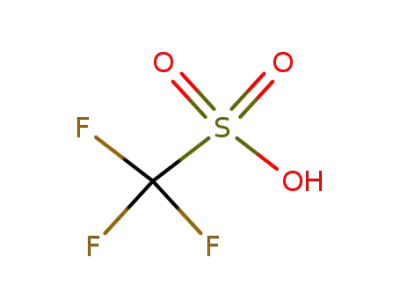
1493-13-6
trifluorormethanesulfonic acid

-
-
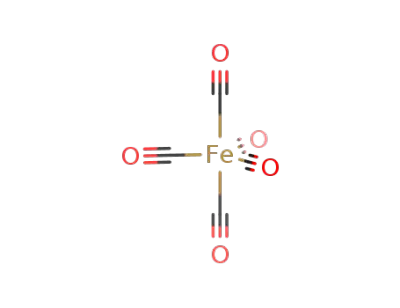
13463-40-6,37220-42-1
iron pentacarbonyl
-
-
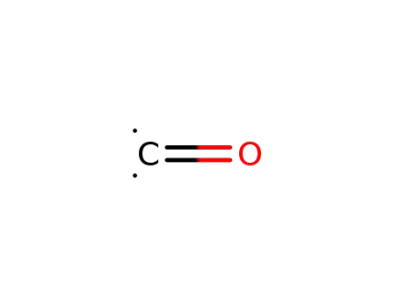
201230-82-2
carbon monoxide
-
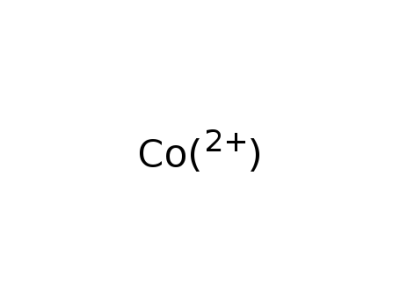
-
22541-53-3,65860-59-5
cobalt(II)
-
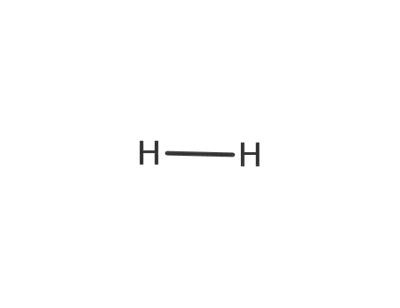
-
1333-74-0
hydrogen
-
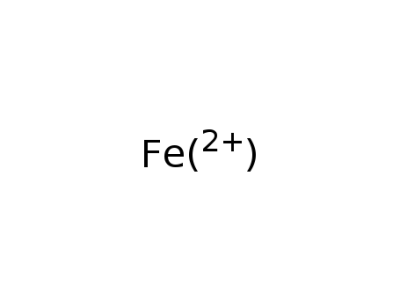
-
7439-89-6,15438-31-0
iron(II)
| Conditions | Yield |
|---|---|
|
In
neat (no solvent);
byproducts: CH4; complex and acid were mixed at -196°C (vac., N2); warming to room temp., react. for 3 d; chromy. on silica gel;
|
-
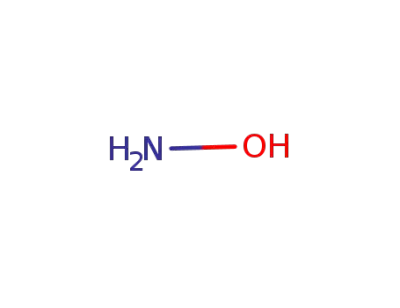
-
7803-49-8
hydroxylamine
-
-
7782-61-8
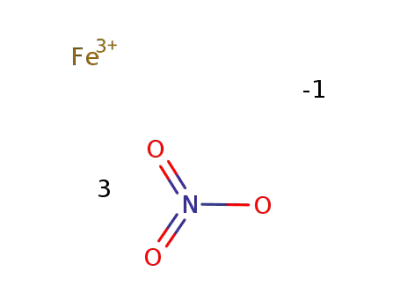
ferric nitrate
-
-
7439-89-6,15438-31-0
iron(II)
-
-
10024-97-2
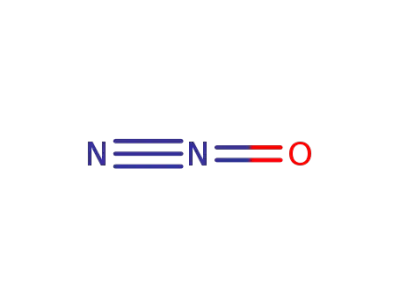
dinitrogen monoxide
| Conditions | Yield |
|---|---|
|
With
water; hydrogen cation;
In
water;
N2-atmosphere; 0.5 M Fe(3+), 0.5 M NH2OH, 30°C, rapid shaking; not isolated, reaction followed by volumetry of N2O;
Kinetics;
|
7439-89-6 Upstream products
-
7732-18-5
water
-
71-43-2
benzene
-
13479-49-7
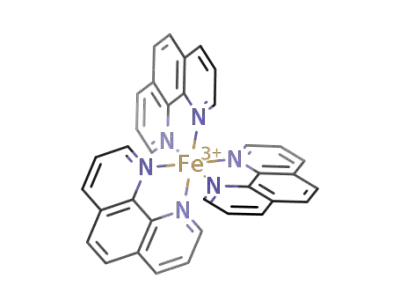
tris(1,10-phenanthroline)iron(III)
-
22541-75-9
titanium(III)
7439-89-6 Downstream products
-
56-40-6
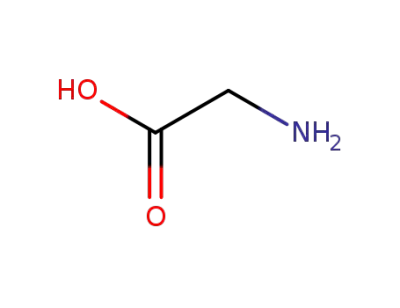
glycine
-
107-95-9
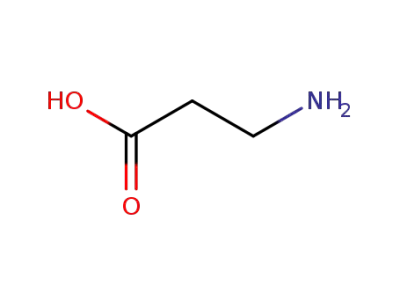
3-amino propanoic acid
-
108-95-2
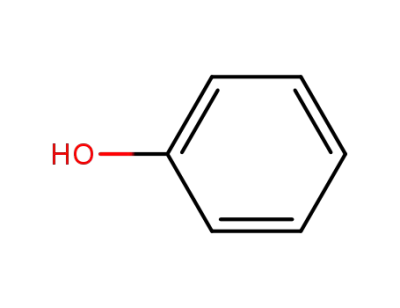
phenol
-
92-52-4
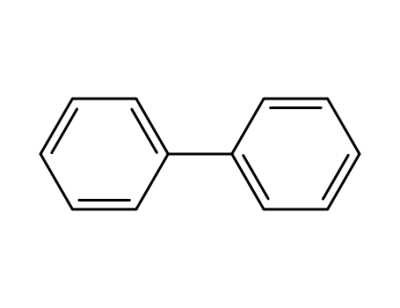
biphenyl